


Where's My Seat?・Logic Puzzles
4.746.00 Reviews
App Specs
- Version
- 1.1.9
- Updated On
- License
- Free
- Downloads
- 1,000,000+
- Developer
- Smartmove Global
- Categories
- Puzzle
- Platform
- Android
Screenshots


 Analysis by AppCompare
I like puzzle games that tell me what I’m trying to solve right away. Where's My Seat?・Logic Puzzles has a clear central idea: work out where people belong by reading clues and arranging the seating. That direct setup makes it easy to understand the appeal before I’ve invested much time. It’s a casual logic game rather than a sprawling puzzle adventure, so the pleasure comes from making sense of a small problem and seeing the arrangement click.
A quick puzzle with a clear goal
That focus makes a difference when I’m choosing something to play between other tasks. I don’t need to learn a complicated premise before getting to the thinking, and the seating format gives each clue a practical role: it rules out a possibility, narrows down a position, or helps connect one person’s place to another. The fun is in turning a handful of statements into a complete arrangement, not in rushing through action or managing a long chain of tasks.
For me, the best way to approach a clue-based seating puzzle is to pause before moving anyone and sort the information mentally. I look for clues that fix a person’s position or establish a relationship, then use those to test the less direct hints. Even when the game makes placing characters feel intuitive, thinking through the constraints first can reduce random rearranging. It’s a small habit that makes the solving feel more deliberate and less like trial and error.
Why the seating format works in short sessions
As a puzzle game, Where's My Seat? keeps its core activity compact: read the clues, consider the seats, and try to find the arrangement that satisfies them. That structure suits a brief break better than a game that expects me to remember a sprawling map, a lengthy story, or several systems at once. I can focus on the logic in front of me, which is especially welcome when I only have a little attention to spare.
There is also a nice balance between visual action and reasoning. The characters and seats give the clues a concrete shape, so I’m not just staring at abstract symbols. At the same time, the visual presentation cannot solve the puzzle for me; I still have to pay attention to the wording and how the clues fit together. That makes the game approachable without turning the main task into a simple tap-through exercise.
Who will enjoy it—and who may want another kind of puzzle
I’d recommend it to people who enjoy deduction but don’t necessarily want a demanding, technical brainteaser every time they open a game. The seating theme offers a friendly entry point for younger players and for anyone who prefers a visible arrangement to grids full of numbers. It can also be a good shared activity: one person can read a clue aloud while another suggests where a character might go, then both can check whether the next clue supports that idea.
If you prefer puzzles built around wordplay, spatial rotation, or fast reactions, this may not be the strongest match. Its identity rests on clue-based placement, so the appeal depends on whether you enjoy comparing statements and eliminating options. Likewise, players who want a deep narrative or a competitive score chase should look elsewhere; the satisfying moment here is solving the seating logic itself.
Worth Reading Before You Choose

EA SPORTS FC Mobile 26 Is a Bigger Football Game, but It Takes Time

Flipboard Shows What News Apps Must Do Beyond the Feed

Switching to Android Auto Means Rethinking Your Driving Routine

Google Calendar Makes a Crowded Week Easier to Manage

Ludo King Makes the Most of the Minutes Between Plans

Baby Panda World Brings Quick Play to Modern Phones, but Its Game Library Feels Busy
Getting Started with Where's My Seat?
Diving into Where's My Seat?・Logic Puzzles is as easy as pie. The app is available for both Android and iOS, so no matter what device you're rocking, you're good to go. After a quick download and installation, you're greeted with a bright and friendly interface that invites you to jump right into the action.
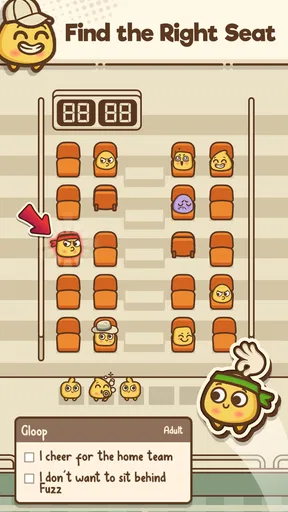
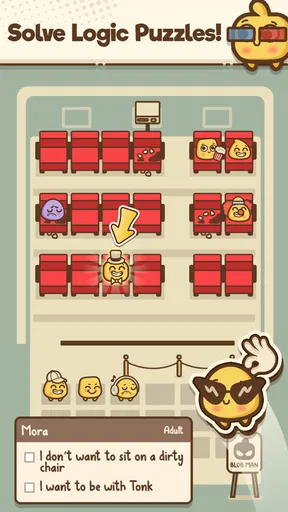
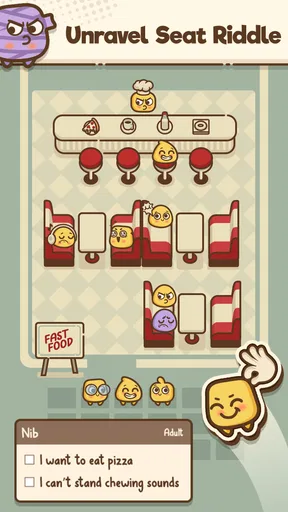
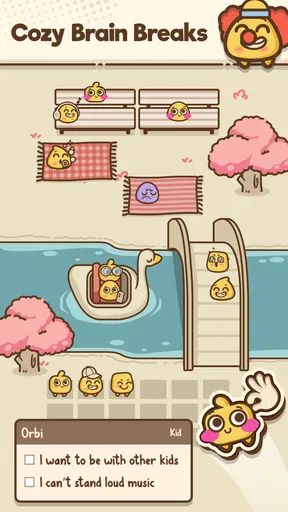
The premise is delightfully simple yet irresistibly engaging. Your task? Help a variety of quirky characters find their seats in different settings, from classrooms to theaters. But there's a catch—each scenario is a puzzle that needs your brain power to solve. Think of it as a mix between a seating chart and a classic logic puzzle.
The Gameplay Experience
What I love about this app is how it manages to keep things fresh and exciting. Each level presents a new challenge, and the puzzles progressively increase in difficulty. This means that just when you think you've got it all figured out, the game throws a delightful curveball at you. It's like a mental workout that doesn't feel like work at all!
The mechanics are intuitive. You drag and drop characters into their rightful seats based on clues provided. For instance, "Sammy needs to sit next to the window," or "Anna can't sit in front of the teacher." It's these little hints that you need to piece together to crack the puzzle. And trust me, when you finally nail it, it's a moment of pure satisfaction.
The pace, and how I play through it
When I want to keep a short session focused, I treat each puzzle as a self-contained task rather than trying to play on autopilot. I read the clues once for the broad picture, then again to catch words that establish exact relationships, such as who must be beside whom or who cannot take a certain position. That second pass is useful because a clue that sounds like background detail may be the one that rules out a tempting arrangement.
A realistic use case is waiting for a coffee or sitting through a quiet stretch before an appointment. I can open the game, work on a seating arrangement, and stop when I need to move on; it doesn’t ask me to follow a complicated plot to understand what I’m doing. I wouldn’t choose it while I’m meant to be listening closely to someone, though. Clue reading needs enough attention that a stream of interruptions can make me lose the thread, even if the puzzle itself is small.
One useful trade-off with visual placement puzzles is that moving characters can help me see a possibility, but it can also tempt me to guess. I get more out of the game when I make a quick mental note of what a clue actually proves before rearranging the seats. If two arrangements still seem plausible, I return to the wording instead of assuming the first layout that looks tidy must be right. That keeps the pleasure in deduction rather than in repeatedly shuffling pieces.
Picking it up again after a break
For an interruption-friendly game, the key question is whether I can return and understand the puzzle without rebuilding a whole chain of context. Here, the individual seating setup gives me a useful visual anchor: I can look at the people, the places, and the clues again, then resume checking relationships. If I expect to be interrupted, I try to remember one unresolved question—such as which seat is still possible for a particular character—rather than keeping the entire puzzle in my head.
That approach is helpful on a commute or during a household pause, when my attention may be divided. Still, I wouldn’t treat it as a game for every spare second: if I have only a moment and can’t read carefully, a simple arcade round or a word-search may be a better fit. The reward here depends on following the clues, so I prefer a few focused minutes over a series of distracted taps.
What keeps the puzzles from feeling like busywork
The format has a natural risk: seating arrangements can start to feel alike if every challenge is approached as the same sequence of moving people until something works. The changing clues and settings help give each problem a distinct identity, but the lasting appeal still comes from the logic. I enjoy it most when I try to explain why a placement follows from the clues, not merely when the characters happen to end up in the right spots.
That also gives the game a modest replay value. I may not return to a solved arrangement for a story twist or a collection system; I return when I want another compact deduction problem. If I’m in the mood for a broad variety of puzzle mechanics, a mixed puzzle collection is likely a better choice. If I specifically want to reason about who sits where, this game’s narrow focus is a strength rather than a drawback.
How it compares with familiar puzzle choices
Compared with number-grid logic puzzles, the seating setup feels more tangible and less formal: people and places make the relationships easy to picture, while the clues still ask for careful elimination. Compared with match-three games or quick reaction puzzles, it is slower and more deliberate, with little appeal if I want constant motion. And unlike a word game, it is not mainly about vocabulary; the challenge is understanding how separate conditions can all be true at once.
That makes it a good fit for someone who likes the reasoning in classic logic problems but finds a page of symbols uninviting. It is less suitable for anyone who wants a puzzle that can be solved by instinct alone. My advice is to choose it when you’re curious about the clue-solving itself, not just because you want a colorful game to tap through while your mind is elsewhere.
Highlights and Unique Features
One of the standout features of Where's My Seat? is its charming cast of characters. Each character has a unique personality and backstory, which adds a layer of depth and humor to the game. You'll find yourself getting attached to these little virtual people, rooting for them as you navigate the puzzles.
The app also boasts a clean, vibrant design. The visuals are crisp, and the animations are smooth, creating an overall pleasant user experience. The developers have clearly put a lot of thought into making the game visually appealing without overwhelming the player with unnecessary clutter.
Another great thing about this app is its accessibility. The puzzles are designed to be challenging but not impossible. They're crafted in such a way that players of all ages can enjoy them. Whether you're a seasoned puzzle solver or a newbie, there's something here for you.
What to know before you settle in
The game is free, which lowers the barrier to trying it, but it includes in-app purchases ranging from $0.99 to $99.99 per item. I’d keep that in mind if a child will be playing, and make sure purchase controls on the device suit your household. The game has an Everyone age rating, but that rating doesn’t mean every child will find the clue reading equally easy; younger players may enjoy solving together with an adult, especially when a sentence contains more than one condition.
It comes from Smartmove Global, and its current version is 1.1.8. The game has a 4.7 average from around 2.5 thousand ratings, with over one million installs. Those figures suggest that many players have tried it, but they can’t tell me whether its particular style will suit my taste. I’d use the free entry point to decide that for myself: if I like careful clue-based seating, the focused premise is appealing; if I’m looking for lots of different puzzle formats, I’d pick a broader collection instead.
The game was released on May 19, 2026, and requires Android 7.0 or later. Those details are worth checking against an older device before planning to play, especially if you’re installing it for someone else. The practical question is less about having the newest phone and more about whether the device can run the app comfortably enough for reading clues and moving characters without frustration.
Why You Should Give It a Try
If you're someone who enjoys puzzles and loves a good mental challenge, then Where's My Seat?・Logic Puzzles is definitely worth checking out. It's a fantastic way to unwind while keeping your brain engaged. Plus, it's one of those games that you can pick up and play whenever you have a few minutes to spare, whether you're waiting for a bus or just relaxing at home.
And hey, it's not just about solving puzzles. It's about the joy of discovery, the thrill of overcoming challenges, and the fun of meeting new characters. It's these elements that make this app stand out from the crowd.
My casual verdict
I’d suggest giving this a try if you want a friendly, focused logic game that can fill a quiet pause without demanding a long commitment. I wouldn’t make it my first choice for distracted moments, for players who need fast stimulation, or for anyone who wants a wide range of puzzle styles in one place. Its best quality is also its main limitation: the experience keeps returning to the seating-and-clues idea, so whether it stays satisfying depends on how much you enjoy that kind of reasoning.
In conclusion, Where's My Seat?・Logic Puzzles is a delightful blend of fun, challenge, and charm. It's more than just a game; it's an experience that invites you to think, laugh, and enjoy. So why not give it a whirl? You might just find your new favorite pastime.
Pros
- Engaging and challenging puzzles.
- Intuitive and user-friendly interface.
- Regular updates with new puzzles.
- Minimal ads for a smooth experience.
- Suitable for all age groups.
Cons
- Limited hints can be frustrating.
- No offline mode available.
- Occasional minor bugs.
- In-app purchases for extra hints.
- Requires internet for full features.
FAQs for Where's My Seat?・Logic Puzzles
What is the main objective of Where's My Seat?・Logic Puzzles?
Where's My Seat?・Logic Puzzles is a brain-teasing game that challenges players to arrange guests around a table according to specific rules and preferences. The main objective is to ensure each guest is seated in the optimal position, based on given clues, while maximizing the overall satisfaction of the group.
Are there different difficulty levels available in the game?
Yes, Where's My Seat?・Logic Puzzles offers various difficulty levels to accommodate both beginners and experienced players. The challenges range from easy to extremely difficult, allowing players to progressively improve their logical thinking skills as they advance through the stages.
Is an internet connection required to play Where's My Seat?・Logic Puzzles?
No, an internet connection is not required to play Where's My Seat?・Logic Puzzles. The game is fully functional offline, making it a convenient option for users who want to enjoy engaging puzzles on the go without needing access to Wi-Fi or mobile data.
Does the game offer any in-app purchases?
Where's My Seat?・Logic Puzzles does include in-app purchases. These purchases can enhance the gaming experience by offering additional puzzle packs, hints, or removing ads. However, the core gameplay is fully accessible without making any purchases, ensuring a fair experience for all players.
Is Where's My Seat?・Logic Puzzles suitable for all age groups?
Yes, the game is designed to be family-friendly and is suitable for all age groups. Its intuitive interface and straightforward rules make it accessible to younger players, while the increasing difficulty levels provide a challenging experience for adults looking to sharpen their logic skills.


